
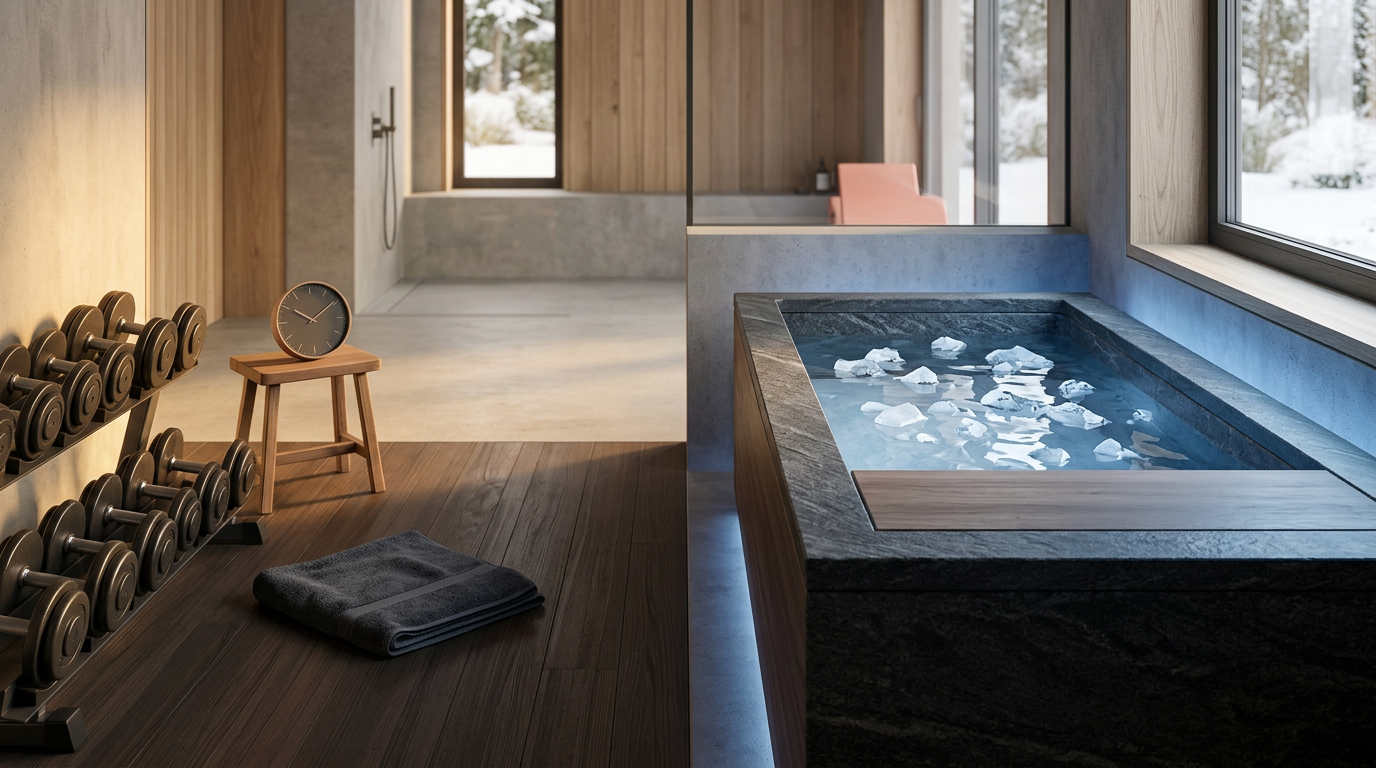
The Hypertrophy Dilemma: Why Cold Water Blunts Muscle Growth
When you lift weights or perform high-intensity resistance training, you create microscopic mechanical damage in muscle fibers. While this damage triggers acute soreness, it is also the foundational spark for hypertrophy (muscle growth) and strength adaptations. Your body repairs this microtrauma through a carefully orchestrated inflammatory cascade: blood vessels dilate, immune cells flood the tissue to clear cellular debris, and an enzyme complex called mTORC1 (mammalian target of rapamycin complex 1) signals muscle protein synthesis to begin rebuilding the fibers stronger than before. Submerging your body in cold water (typically 50°F to 59°F or 10°C to 15°C) immediately after lifting halts this cascade. Rapid peripheral vasoconstriction restricts local blood flow, shutting down the delivery of amino acids and dampening the acute inflammatory signaling required for cellular repair. Landmark studies, including a notable 2015 trial published in The Journal of Physiology by Roberts and colleagues, demonstrated that regular post-exercise cold water immersion significantly blunted long-term gains in muscle mass and strength compared to an active warm-down. If your primary goal is maximizing muscle cross-sectional area or raw strength, submerging in ice immediately post-workout is counterproductive.
When Post-Workout Immersion Makes Sense: Performance vs. Adaptation
While ice baths can compromise long-term muscular hypertrophy, they remain exceptionally valuable in specific performance contexts. The critical distinction lies between training for *adaptation* (building a bigger, stronger engine over months) and training for *immediate recovery* (restoring readiness for an upcoming bout of competition). During multi-day tournaments, back-to-back game schedules, or high-volume endurance competitions, your central objective shifts from maximizing cellular adaptations to clearing fatigue and restoring neuromuscular function as rapidly as possible. In these scenarios, post-exercise cold water immersion shines. By reducing core body temperature, decreasing perceived muscle soreness (DOMS), and suppressing secondary tissue damage, athletes can return to baseline performance faster than with passive rest alone. Distance runners, cyclists, and team-sport athletes often benefit from post-session immersion during heavy competition blocks because endurance signaling pathways (such as PGC-1alpha, which regulates mitochondrial biogenesis) appear far less susceptible to cold blunting than muscle protein synthesis.
Cold Plunging Before Exercise: The Ergogenic Edge and the Risks
Pre-cooling has gained traction as an ergogenic aid, but its utility depends entirely on the ambient environment and the nature of the exercise. Deliberately cooling your body before working out produces distinct physical effects that can either enhance or impair your output. In hot and humid conditions, pre-cooling via cold water immersion lowers baseline core temperature and increases heat storage capacity. This delays the onset of thermal strain, allowing endurance athletes to sustain higher workloads before hitting heat-induced fatigue. Furthermore, pre-workout cold exposure triggers a massive surge in systemic catecholamines—specifically norepinephrine and dopamine—creating acute focus, vigilance, and heightened sympathetic arousal. However, pre-workout plunging carries serious mechanical risks for explosive, high-force activities. Cold muscles and connective tissues exhibit increased stiffness, reduced nerve conduction velocity, and compromised contractile rate of force development. Submerging your lower body in ice water and immediately attempting heavy squats or maximal sprints significantly elevates your risk of acute muscle tears and tendon strains.
Strategic Timing Windows: How to Structure Your Week
To harness the metabolic, mental, and anti-inflammatory benefits of cold immersion without sacrificing your hard-earned strength gains, you must separate cold therapy from your resistance training sessions. The human body does not require an all-or-nothing approach; it responds to thoughtful timing. If you lift weights, establish a buffer between your final rep and your plunge. Research indicates that the primary inflammatory cascade driving muscle protein synthesis peaks during the first two to four hours post-exercise. Delaying cold water immersion by at least 4 to 6 hours—or reserving it for dedicated rest days—allows critical repair cascades to initiate uninhibited.
Tracking the Strain: Biomarkers of Exercise Load and Tissue Recovery
Subjective feelings of soreness do not always correlate perfectly with internal systemic recovery. While a cold plunge may numb pain, your muscle tissues and metabolic organs may still be processing substantial strain. Tracking objective circulating biomarkers provides clear insight into how your training intensity and recovery modalities interact beneath the surface. Two established blood markers offer valuable data on muscle microtrauma and metabolic clearance: aspartate aminotransferase (AST) and blood urea nitrogen (BUN). Monitoring these alongside your thermal practices helps ensure your routine builds capacity rather than masking persistent overreaching.
Common questions
How long should I stay in a cold plunge for recovery?
Current research suggests that 10 to 15 minutes of cumulative exposure per week, broken into 2- to 5-minute sessions at temperatures between 50°F and 59°F (10°C to 15°C), is sufficient to trigger systemic metabolic and mood benefits without excessive thermal stress.
Does cold plunging after a workout stop muscle growth completely?
No, it does not stop muscle growth entirely, but controlled trials show it measurably blunts the rate of muscle hypertrophy and maximal strength gains over time by suppressing mTOR signaling and local blood flow during the critical post-exercise recovery window.
Can I cold plunge immediately after endurance training like running or cycling?
Yes. The molecular pathways responsible for endurance adaptations (such as mitochondrial biogenesis mediated by PGC-1alpha) do not appear to be suppressed by cold water immersion in the way muscle protein synthesis pathways are.
Is taking a cold shower the same as a cold plunge?
A cold shower provides autonomic stimulation, mental alertness, and some metabolic activation, but it does not produce the uniform hydrostatic pressure and rapid core temperature reduction achieved through complete water submersion.
Why do professional athletes still ice bath immediately after games?
In professional sports, immediate recovery for the next game or practice takes priority over long-term muscle building. Cold water reduces acute soreness, swelling, and central fatigue, allowing athletes to compete again within a compressed schedule.
Understand your baseline recovery markers
Ten questions. Four minutes. A clear recommendation before you spend anything.
Take the free assessmentNo cost · No account needed
Newsletter
Get the next guide by email
Plain-language biomarker guides and practical health insights. One email, no noise, unsubscribe anytime.
More from the Learning Hub
This assessment is educational and does not diagnose, treat, or provide medical advice. It is not a substitute for care from a licensed clinician.